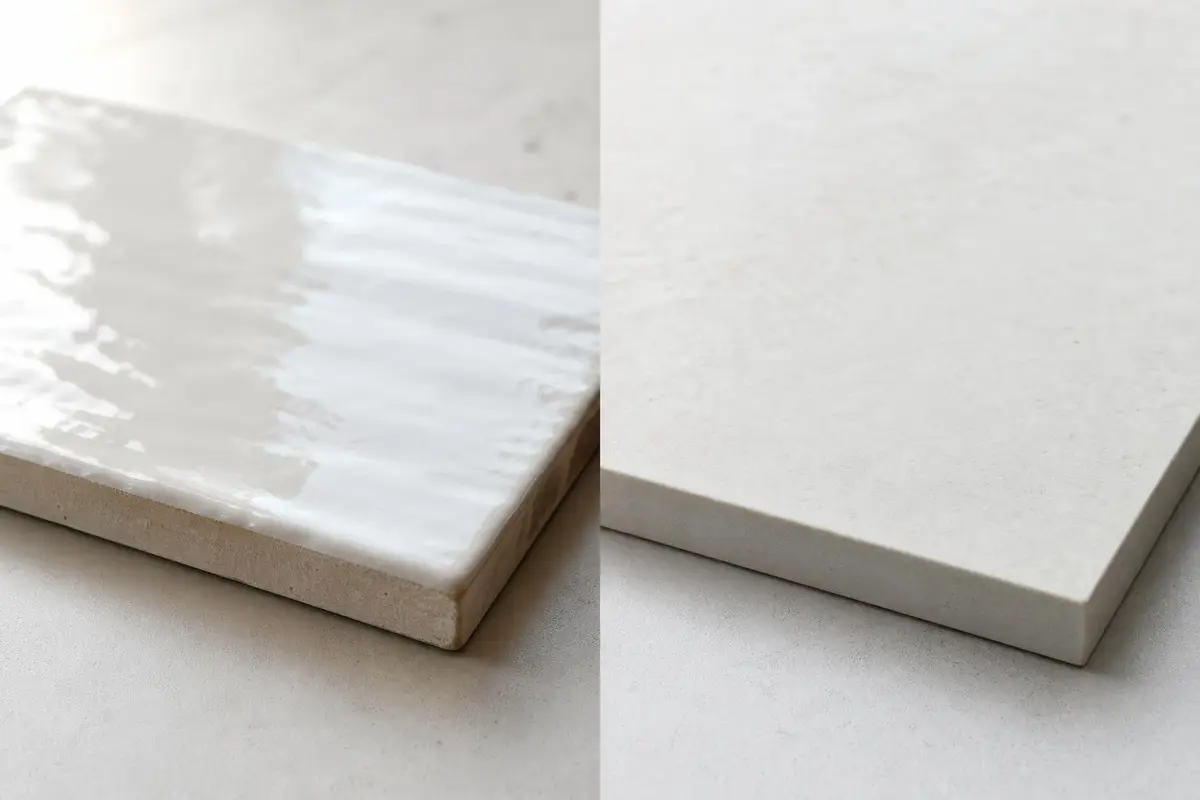
Ceramic vs Porcelain: What Actually Matters for Your Backsplash
TL;DR
For most kitchen backsplashes, ceramic is the smart choice—it's more affordable and performs identically in splash zones. Choose porcelain only for full wall installations or maximum durability.
Quick Decision Guide:
- →Budget-conscious? Ceramic saves significantly with no quality sacrifice
- →Standard backsplash (under 20 sq ft)? Ceramic is perfect
- →Full wall or heavy-use area? Porcelain's density pays off
- →Love handmade looks? Ceramic offers more artisan options
The Real Difference
Here's what I've learned after a decade of backsplash work in Fairfield County: for kitchen backsplashes, the ceramic vs porcelain debate is mostly marketing.
Both tiles handle splashes, heat, and cleaning beautifully. The technical differences—porcelain's lower water absorption and higher firing temperature—matter for floors and showers. For a backsplash behind your stove? Not so much.
When Ceramic Makes Sense
Most backsplash projects. Here's why:
- Cost savings: Ceramic is the more budget-friendly option
- Easier cuts: Softer material means faster installation and lower labor cost
- More variety: Handmade and artisan options are primarily ceramic
- Identical maintenance: Both clean the same way
I installed ceramic subway tile in my own kitchen. After 8 years of daily cooking, it looks brand new.
When Porcelain Is Worth It
Full-wall installations or heavy-use areas:
- Going floor-to-ceiling behind a range
- Commercial kitchen or serious home chef setup
- You want maximum lifespan (20+ years)
- Specific design only available in porcelain
Quick Comparison
Ceramic
- Cost: Budget-friendly (most economical option)
- Durability: 10-15 years
- Water resistance: Excellent for backsplash
- Installation: Easier, faster
- Best for: Standard backsplashes
Porcelain
- Cost: Higher investment
- Durability: 15-25+ years
- Water resistance: Superior
- Installation: Requires diamond blade
- Best for: Full walls, high-use areas
FAQs
Can I use ceramic behind my stove?
Absolutely. Kitchen backsplashes don't get hot enough to damage glazed ceramic. I've installed thousands behind ranges with zero issues.
Will ceramic stain more easily?
Not if it's glazed—and 99% of backsplash ceramics are glazed. The glaze creates an impermeable surface.
Is porcelain harder to install?
Yes, it requires diamond cutting tools and takes about 15% longer, which affects labor cost.
My Recommendation
For a standard 15-20 sq ft kitchen backsplash, go ceramic and spend the savings on better grout or edge trim. You'll get the same 10+ year performance at lower cost.
Want to know exactly what your project will cost? Use our instant quote calculator—you'll have real numbers instantly, no phone calls required.
Serving Fairfield & Westchester County
We install backsplashes throughout Connecticut and New York. See your town's service page for local examples and reviews.
Continue Reading
Explore more expert guides and insights
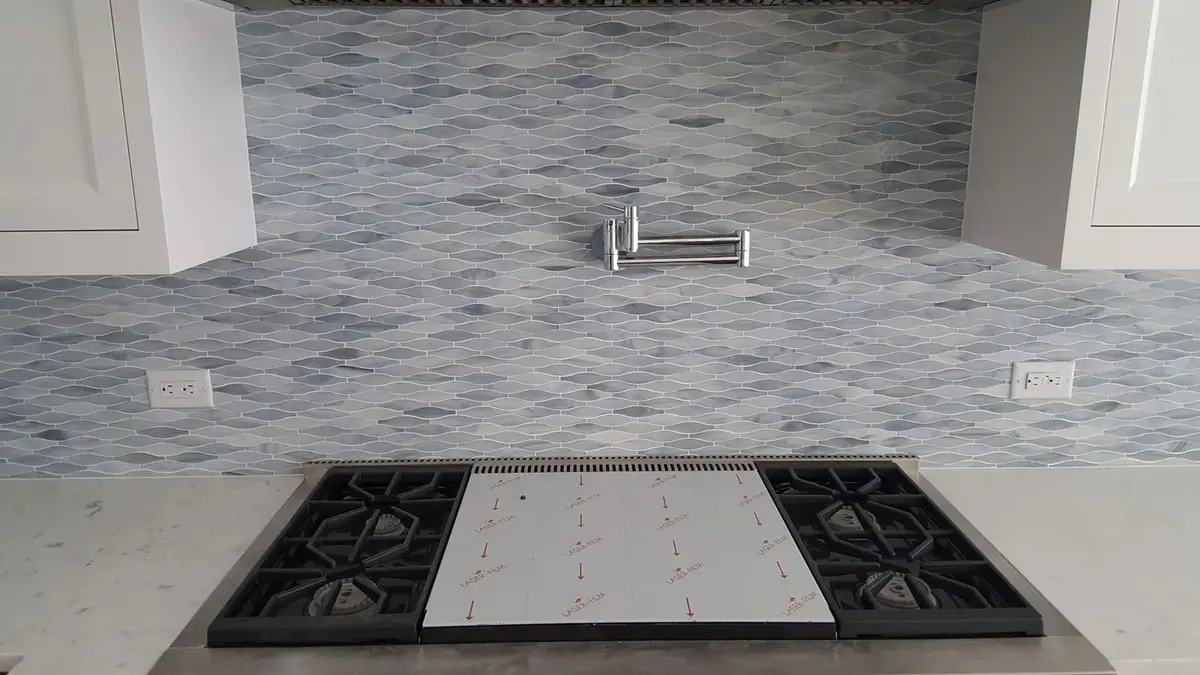
How to Finish the Edges of a Backsplash: Schluter, Bullnose or Pencil Liner
Every exposed tile edge needs a finish: metal profile, bullnose or pencil liner. What each looks like in section, which lines offer which, and how to buy it.
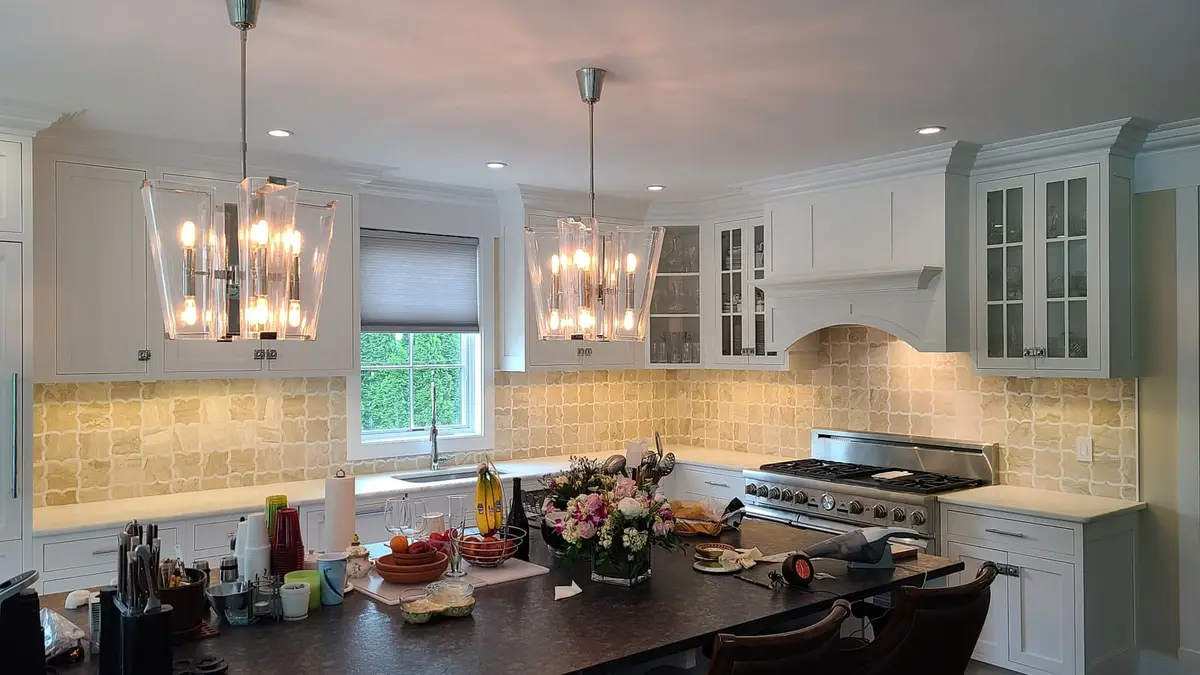
Peel-and-Stick Backsplash vs Real Tile: An Installer's Honest Take
Where peel-and-stick backsplash works, where it fails within a year, and what it does to the wall on the way out. From an installer who gets called after both.